Bedding · Materials Guide
Choosing a Wool Bed Topper: Loft, Fiber, and Care
A wool layer can bring a bed a softer hand, a little extra loft, and a more considered approach to warmth and moisture. The right choice depends on what you want to change: the feel of your mattress, the way its surface handles dampness, or simply the daily comfort of the bed. Before choosing a wool bed topper, look beyond the word wool to the fill, construction, fit, and care instructions that shape how it will live in your home.
Start with what you want the layer to do
“Topper” and “pad” are often used loosely in bedding descriptions, but the terms can point to different priorities. A topper generally suggests a noticeable change in the surface feel: more cushioning, softness, or loft. A mattress pad may be thinner and designed to add a modest layer of comfort while helping protect the mattress from everyday wear. In practice, names are not standardized, so construction and dimensions tell a more useful story than the label alone.
Wool can serve more than one purpose. Depending on its thickness, density, and quilting, a wool mattress topper may feel gently padded or substantially plush. Wool fibers also absorb and release moisture vapor, a quality that can contribute to a more comfortable-feeling sleep surface for some people. These properties do not make a topper waterproof, nor do they guarantee a particular temperature experience. Your room, mattress, bedding, sleepwear, and personal preferences all have a part to play.
Begin with a simple question: what is missing from your current bed? If the mattress feels too firm at the surface, you may be seeking more cushioning. If the mattress itself is uncomfortable, uneven, or no longer supportive, a soft layer is unlikely to solve the underlying problem. If your goal is primarily to protect the mattress, compare pads and protectors designed for that function; a wool layer may manage some moisture but should not be assumed to provide a waterproof barrier.
Being precise about the goal narrows the field. It also helps prevent the common disappointment of buying a wool layer for one purpose and expecting it to deliver another. A lofty topper can change the feel of a bed, for example, but may be warmer or harder to secure than a thin fitted pad. A slim pad may be easier to handle and wash, but will not create the deep, cushioned impression of a substantial topper.
Loft: the difference between a hint of softness and a new silhouette
Loft describes the height and fullness of a bedding layer. It influences how much a topper rises above the mattress and, often, how much cushioning you notice. Yet thickness alone is not a complete measure of comfort. Two wool toppers with similar stated depths may feel different because their wool is packed at different densities, held in place differently, or distributed across the surface in different patterns.
A lower-loft wool pad can offer a subtle change: a little cushioning, a breathable-feeling layer, and a more buffered surface beneath the sheet. It may suit someone who likes the underlying mattress and does not want to alter its character dramatically. A higher-loft topper can feel more enveloping, but it may also change how the mattress responds to your body. People who value a stable, close-to-the-mattress feel may prefer a slimmer construction; those looking for a visibly softer surface may want more loft.
When available, compare the stated thickness with the fill description and the product’s intended use. Is the layer described as a pad, a topper, or a protective cover? Does the quilting keep the fill distributed in small sections, or is it a simpler layer? Are there elastic straps, a fitted skirt, or another method of keeping it in place? These details help translate a specification into the practical experience of making the bed, sleeping on it, and caring for it.
Keep the rest of the bedding system in view. A fitted sheet must accommodate the combined height of the mattress, topper, and any additional pad. Measure the mattress depth, then consider the extra loft you are adding. If the sheet is already a close fit, a thicker layer could make corners pull loose or the sheet ride up. Secure fit matters for comfort and neatness, especially when a topper shifts under regular movement.
Loft can also settle with use. Wool fibers compress and recover differently depending on their processing, density, quilting, and care. Rather than treating a thickness figure as a promise of permanent height, regard it as one piece of the construction picture. Check the maker’s description for guidance on refresh, rotation, or reshaping, and follow it rather than applying care methods used for a different wool product.
Fiber and fill: read beyond the natural-material headline
Wool is not one uniform material. The fiber’s source, preparation, and blend can affect the feel and care of a finished topper. Some products describe wool by region or traceability program; others specify a blend with plant-based batting or another fiber. Read the full materials list, including the shell fabric and any backing, rather than assuming that a wool-filled product is made exclusively from wool from edge to edge.
The shell is especially important because it is the fabric closest to the sleeper and the structure that contains the fill. Cotton is a common choice for a cover, but its weave, finish, and certification status can vary. A description that says “organic cotton” should be considered alongside any details about certification and which components are covered. Certifications apply according to their own standards and scope; one material certificate should not automatically be interpreted as a certification of every component or of the whole finished product.
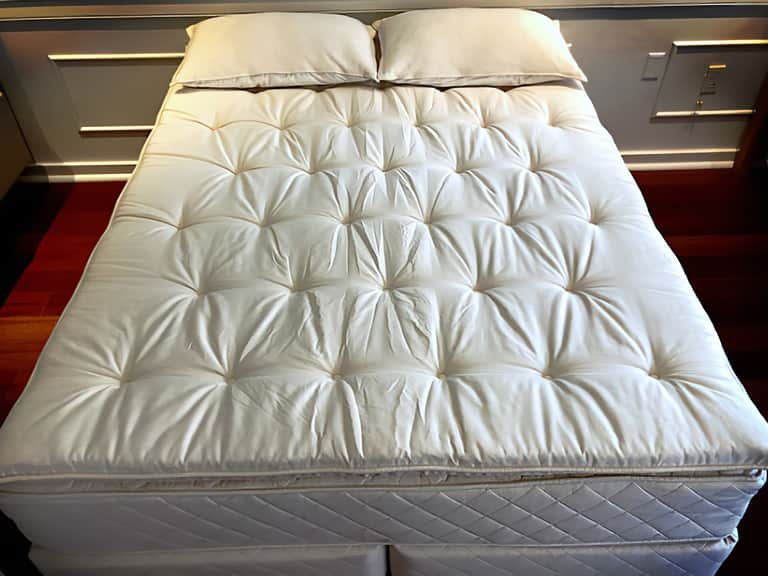
Wool may be quilted, tufted, or held in place through other construction methods. Quilting creates compartments or stitched pathways that help control movement of the fill, while hand tufting secures layers at intervals. The construction affects appearance, surface texture, and how evenly the padding stays distributed. Look for clear product information about fill composition, shell material, construction, and origin. If a listing leaves important details vague, avoid filling the gaps with assumptions.
“Organic,” “natural,” “traceable,” and “responsibly sourced” do not mean exactly the same thing. They are not interchangeable shortcuts for judging quality. If organic sourcing is important to you, check what is certified, by whom, and whether the certification applies to the wool, the textile, or the finished article. If animal-welfare or land-management practices matter in your decision, look for specific, verifiable information rather than relying on a broad eco-friendly claim.
A wool topper is also not automatically hypoallergenic or suitable for every sleeper. People may react to wool, dust, lanolin residues, or other aspects of a product; sensitivities differ. Anyone with a known allergy or concern should review the precise materials and consult an appropriate health professional if needed. A cleanable cover, a barrier layer, or a different material may be more suitable depending on individual circumstances.
Warmth and moisture: a softer climate at the bed surface
Wool is valued in bedding partly for how it interacts with moisture. The fiber can absorb water vapor and release it as conditions change, which may help the bed feel less clammy for some sleepers. That is a different function from blocking liquid spills. A wool mattress pad should not be treated as a waterproof protector unless the product information explicitly describes a tested waterproof layer. For spill protection, look for a purpose-built protector and understand what its barrier is made from.
Temperature comfort is similarly personal. Wool is often associated with warmth, but the experience of a wool layer depends on its thickness, density, the fabrics above and beneath it, and the bedroom environment. A breathable construction may feel different from a dense, heavily insulated one. Someone who sleeps warm may prefer a thinner wool pad and lighter sheets; someone who likes a more buffered, cozy surface may be drawn to greater loft. There is no single “cooling” or “warming” outcome that can be promised for every body and bedroom.
Consider the full stack: mattress, wool layer, protector, fitted sheet, and blanket or duvet. Adding several thick layers can change airflow and heat retention, while a waterproof protector beneath a topper can affect how moisture moves through the system. If you are adjusting a bed to feel more comfortable, change one layer at a time and give yourself several nights to assess the result. A measured approach makes it easier to identify which change is helping.
Those who sweat heavily or need dependable liquid protection should compare materials and care requirements carefully. Wool’s moisture-handling reputation does not replace a waterproof barrier, and not every wool pad is designed to be washed frequently. The right choice is the one whose performance matches the household’s actual needs, including children, pets, spills, or a mattress warranty that specifies protective requirements.
Fit and construction: make the measurements before you buy
Start by confirming the mattress size and depth. Measure the mattress itself, including any existing permanent pillow top or built-in cushioning. Then check the topper’s dimensions, how it is secured, and whether the manufacturer gives a maximum mattress depth. A nominal size such as queen or king does not guarantee a perfect fit across every brand, and a topper that is too small or too loose may bunch beneath the sheet.
Attachment can be as simple as a layer resting on the mattress or as secure as elastic corner straps. Each approach has trade-offs. A loose layer can be straightforward to remove and air, but may shift more readily. Straps may help hold it in place, though they must be compatible with the mattress design and accessible around the corners. If you use an adjustable bed, check that the topper is intended to move with the mattress and does not interfere with its articulation.
Inspect the care label before purchase, not after the first spill. A hand-wash-only or spot-clean layer requires a different household routine from a machine-washable pad. Consider whether you have space to air-dry a large textile, whether a shared laundry machine can accommodate its bulk, and whether you can manage a product that must be handled gently. Practical care is part of fit: a topper that suits your mattress but not your routine may become difficult to maintain.
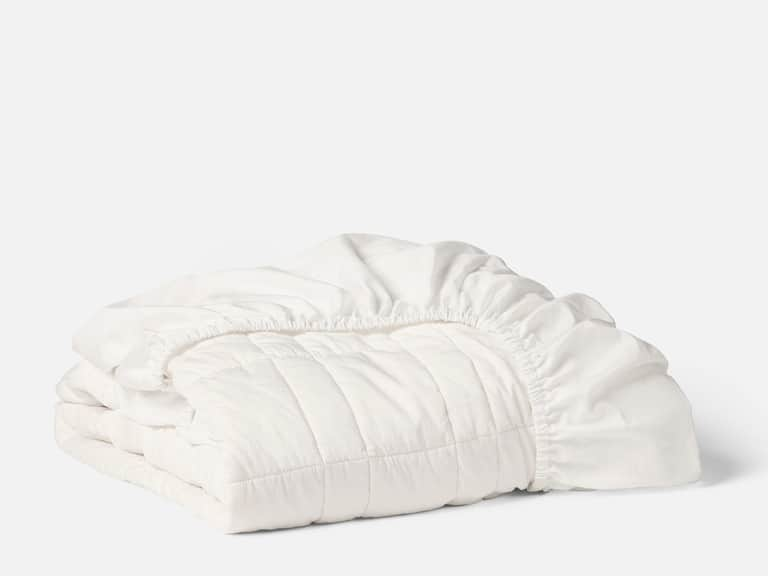
For a natural, lightly protective layer rather than a wool topper, the Obasan Organic Wool Moisture Pad Protector is described as a wool pad held in place with elastic straps. Its care instructions call for freshening outdoors as needed, hand washing or a gentle cold machine wash, and hanging to dry indoors; it should not go in the dryer. That care profile makes the product a useful example of why wool layers should be evaluated as complete systems, rather than by fiber name alone.
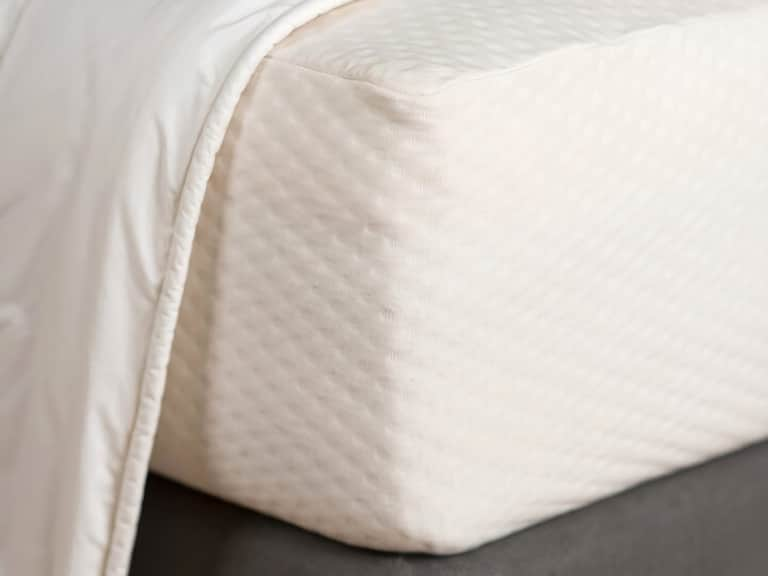
For an alternative construction with different care demands, the Washable Wool Filled Mattress Pad is described with a wool blend and an organic sateen shell. Its stated instructions allow a cold gentle machine wash and low tumble drying. Always follow the specific label for the item you own; wool products can have very different washing guidance, and one item’s instructions should never be assumed to apply to another.
Care: protect the fiber, preserve the loft
Care is where an attractive materials choice meets ordinary life. Wool bedding is not universally machine washable, and even products that can be washed may have specific temperature, cycle, detergent, and drying limits. Follow the manufacturer’s instructions exactly. Heat, vigorous agitation, unsuitable detergent, and overdrying can damage fibers or alter the size and feel of a textile. If the care label says spot clean or air refresh, do not put the item through a routine wash simply because another wool pad allows it.
For small marks, first consult the care instructions and use the least intensive method permitted. Blotting is generally preferable to aggressive rubbing, which can spread a stain or stress the fabric. Avoid soaking a bulky wool layer unless its maker specifically allows it. If a larger spill occurs, act promptly, but do not improvise with bleach, harsh stain removers, or high heat. When in doubt, contact the manufacturer or a professional cleaner familiar with the item’s construction.
Air-refreshing can be a low-effort part of upkeep for products whose instructions allow it. Use a clean, dry, well-ventilated place and avoid prolonged exposure to intense direct sun unless the maker recommends it. A topper needs to dry fully before being returned to the bed; lingering dampness can create an unpleasant environment and undermine the purpose of refreshing it. The goal is gentle airing, not an intensive treatment.
Routine protection can reduce the need for frequent washing. A washable sheet is the first barrier between the sleeper and the topper. A separate mattress protector may guard against spills, but its materials and position in the bedding stack can affect feel and breathability. Choose layers that work together, and check whether the wool topper’s instructions permit use with a particular type of protector.
Storage matters, too. If you remove the topper seasonally, clean and dry it according to its care label before putting it away. Store it in a dry, breathable space rather than compressing it tightly for long periods, unless the manufacturer says compression is acceptable. Keep it away from moisture and pests, and avoid placing heavy objects on top that could flatten the fill.
A practical comparison checklist
Product pages can make the search feel more complicated than it needs to be. A concise checklist keeps attention on the details that affect daily use. Compare each candidate against the same questions, rather than letting a single appealing phrase decide the purchase.
- Purpose: Is this a cushioning topper, a modest mattress pad, or a moisture-focused protective layer?
- Loft and feel: What thickness and density are stated, and how much change do you actually want at the bed surface?
- Fill: Is the product 100% wool or a blend? Are fiber source and traceability details clearly provided?
- Shell: What fabric contains the fill, and are any organic or other certification claims clearly defined?
- Construction: Is the wool quilted or tufted? How is the layer secured to the mattress?
- Fit: Do the dimensions match your mattress, depth, and adjustable-base setup?
- Moisture protection: Is it merely absorbent or moisture-managing, or is it explicitly designed to be waterproof?
- Care: Is it spot-clean only, air-refreshable, hand-washable, or machine washable? How must it dry?
- Certifications: Which component is certified, what standard is named, and does the claim apply to the finished item?
- Household needs: Will the care routine suit your schedule, laundry equipment, sensitivities, and expected wear?
When a listing offers limited detail, treat that as a reason to ask questions, not as permission to infer features. Clear answers about materials, fit, construction, and care are more useful than broad claims about luxury or wellness. Keep a copy of the care instructions and warranty information after purchase, particularly for a product that should not be routinely laundered.
Common expectations worth recalibrating
A wool bed topper can improve the feel of a sound mattress, but it cannot repair sagging, restore broken support, or correct a poor mattress fit. If the surface has deep depressions or the underlying structure is failing, adding loft may disguise the issue briefly without resolving it. A topper is best understood as a comfort layer, not a substitute for a suitable mattress.
Nor does “organic” automatically mean maintenance-free, chemical-free in every possible sense, or appropriate for every sleeper. Certification is specific to a standard and scope. Wool and cotton remain natural fibers with real care requirements, and a finished product may contain several components made under different conditions. Ask what is verified, then make a decision based on the evidence provided.
Finally, moisture management should not be confused with waterproofing. Wool’s ability to interact with moisture vapor may contribute to a comfortable sleep environment, but it does not guarantee protection from a spilled drink, a leak, or an accident. If liquid protection is essential, choose a barrier designed and described for that purpose, and consider how it will affect the feel of the whole bed.
Choose for the bed you have—and the care you can give it
The most successful wool mattress topper is not necessarily the loftiest, the most elaborate, or the one with the longest list of material claims. It is the layer whose feel answers a real need, whose dimensions suit the mattress, and whose care instructions fit the rhythm of the household. A carefully selected wool pad can bring quiet cushioning and a more considered material choice to the bedroom, but its qualities are best appreciated when expectations are clear.
Before ordering, measure the bed, decide how much softness you want, read the full fiber and shell description, and check the care label. Compare the construction and attachment method, then confirm whether the product is intended to cushion, protect, or do a little of both. These small acts of scrutiny make the purchase less about a promise and more about the particulars that determine comfort over time.
In bedding, good design often lives in the details that are easiest to overlook: a well-secured corner, a fill that stays evenly distributed, a cover that feels right against the sheet, and a care routine you can realistically maintain. Let those details guide the choice. The result is a bed that feels more intentionally made—softened where you want it, breathable in the way your environment allows, and cared for according to the material it contains.